


Electroplating and grinding shop
Enhancing the functionality of components through innovative, cost-effective refinements and refurbishments, thereby contributing to the success of our customers – this is why we have developed coatings that fulfil a variety of functions.
Our galvanizing systems are characterized by high throughput and availability. This enables us to meet even short-term delivery deadlines.
We provide services for:
Our services include repairs involving the removal of nickel and chrome layers, refurbishment of worn parts, welding and pad printing.l
<ul>
<li>L= 5.700mm D=1.800mm</li>
<li>Workpiece weight up to 10 tons.</li>
</ul>
<ul>
<li>L=5.500mm D=850mm</li>
<li>Workpiece weight up to 3 tons.</li>
</ul>
- up to 900 mm diameter
- up to 6,000 mm length
- up to 5,000 kg weight
- with contact wheel in oil bath
- up to 900 mm diameter
- up to 6,200 mm length
- up to 1.0 RZ
- up to 500 mm diameter
- up to 1,000 mm length
- up to 500 kg weight
High hardness, good wear resistance, low tendency to adhesion and high temperature resistance (up to 400 HV) are the advantageous properties of hard chrome coatings.
The coating with nickel from nickel sulfamate baths is a very ductile layer with a hardness of approx. 220 HV. This layer is absolutely pure and consists of 100% nickel. The nickel layer is completely pore-free and ideally suited for combination with chromium as Ni/Cr.
Nickel / chromium is a highly corrosion-resistant coating for all high-quality components.
Nickel is not just nickel – what do you want to achieve with a coating?
With alloyed nickel coatings, many requirements can be met and problems can be solved.
Nano nickel with a grain size of only a few nm results in a nickel coating with very good elasticity, significantly increased strength and temperature stability.
Hard chrome plating: fundamentals of the process
What is hard chrome?
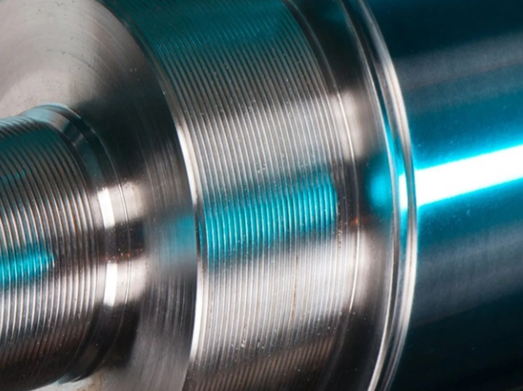
Hard chrome refers – in contrast to decorative chrome – to a thicker chromium coating that can be applied to the base material up to several millimeters, depending on the application. Decorative chrome plating, on the other hand, typically involves only a few thousandths of a millimeter.A distinction is therefore made between “functional” and “decorative” chrome plating.
In terms of chemical and physical properties, there is essentially no difference. Chromium remains chromium.
-
Special hard chrome / precision hard chrome
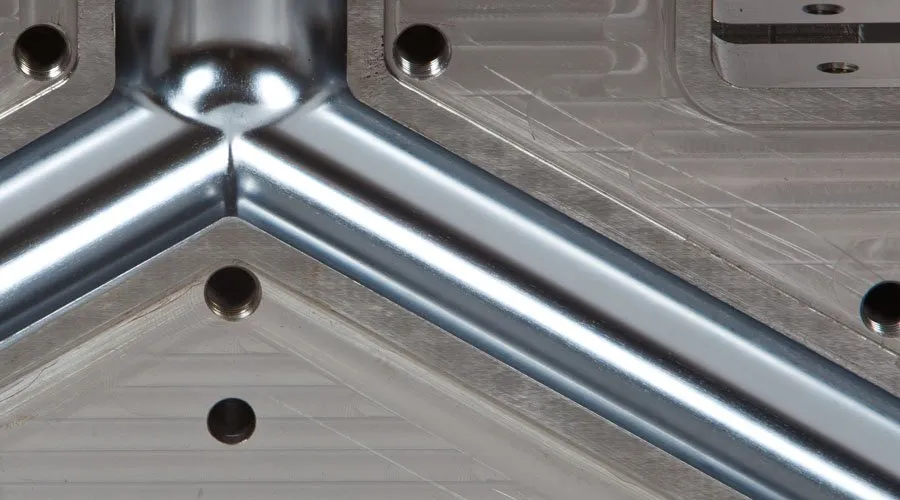
For particularly high-quality and high-precision components, we have a dedicated department in which we process parts with complex geometries.
Coating properties
High hardness, good wear resistance, low tendency to adhesion and high temperature resistance (up to 400 HV) are the advantageous properties of hard chrome coatings.
Last but not least, the properties of the coated component depend on the surface condition and composition of the base material, e.g. steel, aluminum, non-ferrous metals and their alloys.
Structure and microstructure
From both sulfuric and mixed-acid chromium electrolytes, microcracked chromium layers are deposited under typical operating parameters. Substances such as PTFE (Teflon®) can be embedded into these cracks to improve friction behavior. This can significantly increase the wear resistance of hard chrome coatings. The crystal structure of chromium depends on the composition and deposition conditions of the hard chrome electrolyte.
Chemical properties and corrosion protection
Chromium behaves “noble” due to the rapid formation of an oxide layer on its surface. This means that corrosion resistance is significantly increased by this oxide formation. Hard chrome coatings are therefore resistant to many chemicals and generally provide good corrosion protection for the base material. This applies in particular to thicker hard chrome coatings. In addition, different types of chrome baths and process variants, e.g. multi-layer chrome plating or multi-layer systems such as nickel-chrome coatings, contribute to improved corrosion protection.
Naturally, as with all metal coatings, the attacking corrosive medium is responsible for the corrosion resistance.
Mechanical properties
The special structure of the hard chrome coating is responsible for its high hardness. The most common chrome coatings reach approximately the hardness of corundum and are therefore significantly harder than other metals, e.g. iron, cobalt or nickel. They are also harder than nitrided or case-hardened steels. The Vickers hardness without heat treatment is 800 to 1,100 HV 0.1.
During hard chrome plating (50-60°C), no deformation of the workpieces occurs. In addition, the exceptional wear resistance of hard chrome coatings should be emphasized. The coefficient of friction is lower than that of other metals and their alloys. A (hard) chrome-plated surface does not discolor even at elevated temperatures.
Nickel
The coating with nickel from nickel sulfamate baths is a highly ductile layer with a hardness of approx. 220 HV. This layer is absolutely pure and consists of 100% nickel. The nickel layer is completely pore-free and ideally suited for combination with chromium as Ni/Cr.
Please note: for Ni/Cr, the chromium layer should always be thinner than the nickel layer. For pistons, 40 µm Ni / 30 µm Cr or 50 µm Ni / 30 µm Cr are typical.
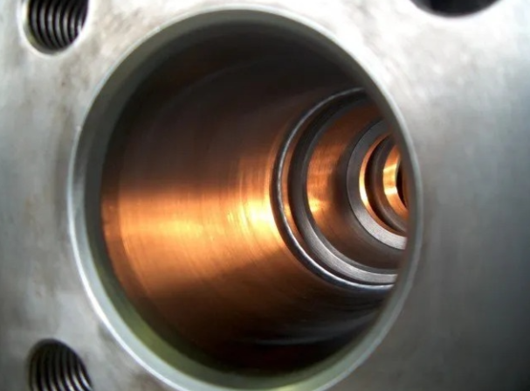
Nickel layers from nickel sulfamate baths are applied to pistons, rolls, tubes and plates made of steel, copper and other non-ferrous metals as well as on carbon fiber. Coating thicknesses from a few µm up to 10 mm are possible. The hardness according to HV 0.1 ranges from 200 to 500 HV. Our nickel alloys Ni/Fe, Ni/Co, Ni/Mg and our nano nickel reach up to 680 HV.
Nickel / chromium
Nickel / chromium is a highly corrosion-resistant coating for all high-quality components. Please note that in this combination, the nickel layer is always thicker than the hard chrome layer. A common specification for pistons is 40 µm nickel and 30 µm hard chrome. We are also happy to advise you on other combinations.
Nickel layers of several millimeters are possible.
Nickel alloy
Metallurgical industry
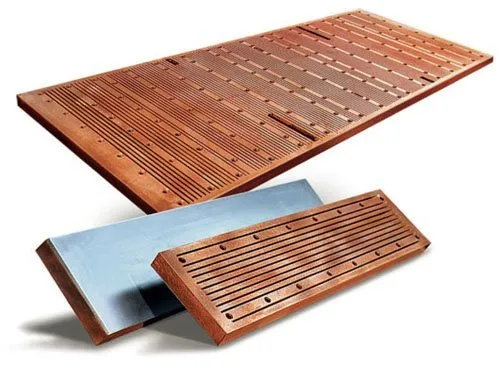
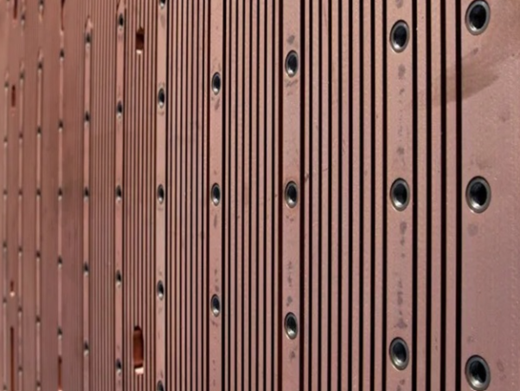
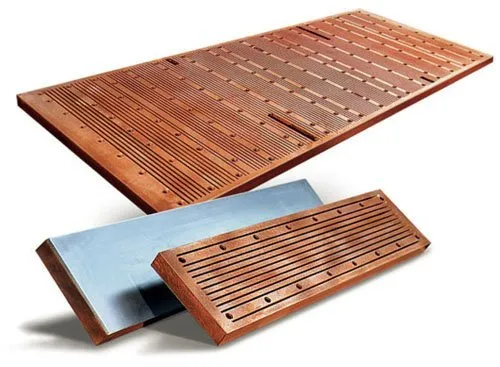
The mold plates for continuous casting plants require a special and sophisticated coating.
What is the objective of such a coating?
Nickel plating with layer thicknesses of 0.5 to 4.0 mm has been known for years. Nickel is not just nickel – there are nickel coatings with and without tensile or compressive stress. The standard hardness of a nickel layer is approx. 220 HV (hardness up to 450 HV available on request). The processing temperature in the baths is approx. 50°C.
With alloyed nickel coatings, many requirements can be met and problems can be solved.
Nano nickel
Nano nickel with a grain size of only a few nm results in a nickel coating with very good elasticity, significantly increased strength and temperature stability.
Nano nickel with metal oxides consists of nickel sulfamate and electrochemically incorporated metal oxides with hardness ranging from 2,000 HV to 4,500 HV. A combination of metal oxides with NiFe or NiCo is possible.
This provides the possibility of incorporating very hard particles into a ductile nickel layer, shifting wear from the nickel to the very hard oxides.
Regardless of the coating selected, the ductility of the coating decreases with increasing hardness. The consequence is cracking in the casting surface.
Suitable coatings are those with 420 HV:
- NiCo, NiFe and NiMg each up to 420 HV
- NiFe can be produced with hardness levels from 300 to 600 HV, but for mold plates only up to 430 HV is suitable
- NiMg is comparable to NiFe coatings but has lower temperature stability
Copper
We are happy to assist with your inquiry in the field of copper coatings and finishing.
Please feel free to send us your request – ideally including a drawing or sketch – so that we can design the optimal solution for your requirements.
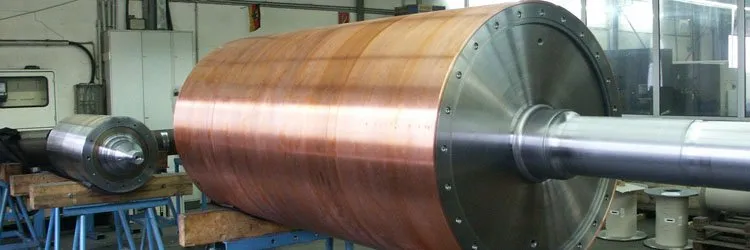
Carbon fiber roller coating
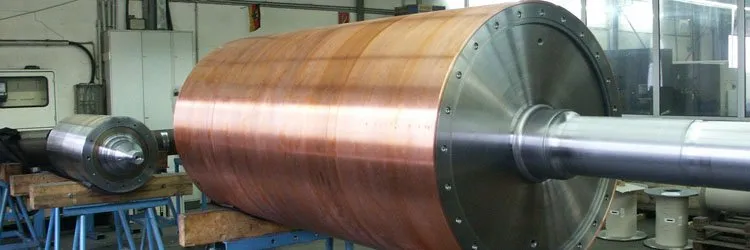
The coating of carbon fiber rollers has been established with us for many years. We apply a strong nickel or nickel alloy layer and subsequently chrome plate it.
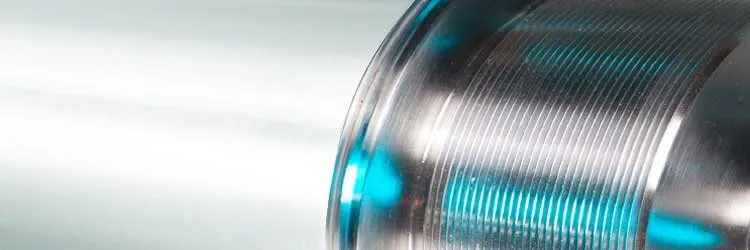
We are happy to assist with your inquiry in the field of copper coatings and finishing.
Please feel free to send us your request – ideally including a drawing or sketch – so that we can design the optimal solution for your requirements.
Quality assurance
QA – Management
The implemented quality management system and its maintenance in accordance with DIN EN ISO 9001:2015 are monitored through regular internal and external audits.
Our quality assurance is both a commitment and an essential requirement for us to ensure the highest level of product safety for our customers.
QA – Laboratory
In our in-house laboratory, processes are monitored and measured during daily operations. Preventive maintenance and analytical control of bath concentrations increase process reliability in production.
Our in-house laboratory inspects all electroplating baths at defined intervals. The employees involved in the respective production processes also support and share responsibility for quality inspections.
Logistics
We supply the Saar-Lor-Lux region with our own trucks and delivery service. We are happy to accommodate your logistical requirements within our scheduled nationwide tours.
Upon request, we handle deliveries and collections ourselves. A flat-rate fee is charged per delivery or collection. Please feel free to contact us for details.
All other shipments are dispatched ex works via freight forwarders or parcel services.
Upon request, we handle deliveries and collections ourselves. A flat-rate fee is charged per delivery or collection. Please feel free to contact us for details.
All other shipments are dispatched ex works via freight forwarders or parcel services.